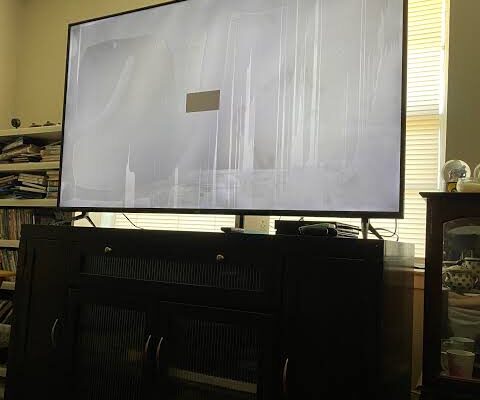
A television can be one of the most expensive electronic devices in a living room, so a water spill can be alarming. A tipped-over glass, leaking pipe, overflowing humidifier, cleaning accident, or basement moisture can expose a TV to liquid and potentially damage its internal electronics.
But does water damage automatically mean the television is finished?
Not necessarily. Some water-damaged TVs can be repaired, particularly when the exposure is limited and the television is disconnected from power quickly. However, liquid can also cause short circuits, corrosion, damaged connectors, power-supply problems, and display faults. In serious cases, the cost of restoring the television may approach or exceed the value of replacing it.
The most important thing is what you do immediately after the accident.
What Happens When Water Gets Inside a TV?
Modern televisions contain numerous electronic components packed into a relatively thin cabinet. Depending on the model, there may be a power supply board, main board, display-control circuits, LED backlights, speakers, ribbon cables, connectors, and other sensitive components.
When water enters the television, it can create several different problems.
Short Circuits
Water can create an unintended electrical path between parts of a circuit. If the TV is powered while moisture is present, this can cause components to fail.
A television that was switched on during a spill may therefore have more serious damage than one that was disconnected immediately.
Corrosion
Even after visible water disappears, the problem may not be over.
Moisture can contribute to corrosion around connectors, circuit-board contacts, solder joints, and other metal components. Corrosion may cause immediate problems or lead to intermittent faults later.
Manufacturers warn that liquid exposure can result in internal damage or corrosion even when an electronic device appears to work normally afterward.
Damage to Connectors and Ribbon Cables
Televisions rely on numerous connectors to move power and picture signals between different components.
If water reaches these connections, the TV may develop:
- Flickering
- Lines across the picture
- Missing sections of the display
- Intermittent operation
- No picture
- Random shutdowns
These symptoms do not necessarily identify one specific failed component, so testing is important.
What Should You Do Immediately After a Spill?
Your first priority should be safety.
If water has entered the television, do not touch electrical connections with wet hands. If it is safe to do so, disconnect the television from the power supply.
Do not switch it on simply to see whether it still works.
LG’s TV safety documentation advises unplugging a television and referring it to qualified service personnel when liquid has been spilled or the product has been exposed to water or moisture.
Samsung also advises that when liquid enters an electrical appliance, the power should be disconnected if it can be done safely and professional service should be contacted.
Do Not Keep Testing It
One of the biggest mistakes is repeatedly turning the television on after a spill.
You might think that if the screen appears normal, the TV has escaped damage. Unfortunately, moisture can remain inside the cabinet.
If electricity reaches wet or contaminated circuitry, additional components can be damaged.
The safest approach is to leave the television disconnected until it has been adequately dried and, when internal exposure is suspected, inspected by a qualified technician.
Should You Use a Hair Dryer?
Using a hair dryer seems like an easy solution, but it is not recommended.
High heat can damage plastics, adhesives, display materials, and other sensitive components. Strong airflow can also push moisture farther into the television rather than removing it.
Samsung specifically advises against using hair dryers and external heat sources when drying liquid-exposed electronics.
Instead, keep the equipment disconnected and in a dry, well-ventilated environment while arranging appropriate inspection if liquid entered the cabinet.
What If Only a Few Drops Reached the TV?
The amount of water matters, but where the water went is often even more important.
A few drops that remain on the outside of the cabinet may cause little or no damage.
However, a small amount of liquid entering through:
- Ventilation openings
- HDMI ports
- USB ports
- Button openings
- Speaker openings
- Gaps around the screen
could potentially reach internal electronics.
A larger spill that stays entirely on the exterior may be less serious than a smaller amount that reaches a circuit board.
For this reason, it is difficult to judge the condition of a television simply by looking at the amount of water involved.
What Type of Liquid Caused the Damage?
Not all liquid exposure is the same.
Clean water is different from:
- Coffee
- Soft drinks
- Juice
- Milk
- Salt water
- Cleaning products
- Soapy water
- Other beverages
Sugary drinks and other liquids can leave residues behind after they dry. Those residues can create additional problems around electronic contacts and circuit boards.
When seeking a diagnosis, tell the technician exactly what was spilled and approximately where it entered the television.
This information can help guide the inspection.
Can a Water-Damaged TV Still Turn On?
Yes, and this can sometimes be misleading.
A television may turn on normally immediately after a minor liquid exposure but develop problems later.
For example, corrosion or residue may affect a connector gradually. A TV that initially works could later develop picture problems, random restarts, input failures, or intermittent shutdowns.
This is why a television should not be considered completely safe simply because it turns on after drying.
The same principle applies to other electronics: visible dryness does not necessarily mean that internal moisture or contamination has disappeared.
Common Symptoms of Water-Damaged TVs
Water exposure can produce many different symptoms depending on which components are affected.
TV Will Not Turn On
If the power supply or another essential circuit has been damaged, the television may show no response.
The standby indicator might remain off, or the TV may attempt to start and immediately shut down.
Sound but No Picture
A damaged display circuit, connection, or panel-related component may cause the TV to produce audio while the screen remains black.
The backlight may also be involved.
Flickering Screen
Moisture or corrosion around signal connections can potentially cause an unstable picture.
The screen may flicker, briefly disappear, or change appearance while the television is operating.
Lines Across the Screen
Vertical or horizontal lines can appear when display-related circuitry or connections have been affected.
However, lines can also result from unrelated hardware failures, so they should not automatically be blamed on water.
Strange Colours or Distorted Images
A television affected by moisture may develop unusual colors, distorted images, or sections of the screen that look different from the rest.
Possible causes include damaged boards, connectors, display electronics, or the panel itself.
Random Restarts
If the television repeatedly turns itself off and back on, the problem may involve the power system, main board, or another internal component affected by the liquid.
Can Water Damage the TV Screen?
Yes.
The display panel is particularly sensitive because it contains extremely fine electronic structures and connections.
If liquid reaches the panel or its associated electronics, the resulting damage can be difficult or impractical to repair.
This is one reason why a television with water damage should be evaluated before anyone assumes that a particular circuit board needs replacement.
Sony treats liquid damage as physical damage and directs customers toward product support when a TV has suffered liquid exposure.
What Does a Technician Check?
Professional diagnosis can involve several stages.
1. External Inspection
The technician first looks for visible signs of moisture, residue, staining, or other damage.
The location of the spill can provide useful information.
2. Internal Inspection
If liquid entered the television, internal components may need to be inspected for moisture or corrosion.
This should not be attempted casually because televisions contain electrical components and may present safety hazards.
3. Power Supply Testing
The power board may be checked to determine whether it is functioning correctly.
A damaged power supply can cause a completely dead television or repeated shutdowns.
4. Main Board Testing
The main board controls many television functions, including inputs, system software, signal processing, and communication between components.
Water damage to this board can produce a wide range of symptoms.
5. Display System Testing
If the TV powers on but has picture problems, the technician may inspect display connections, control circuitry, backlights, and the panel.
The goal is to determine which component is actually responsible rather than replacing parts unnecessarily.
Is Water-Damaged TV Repair Expensive?
There is no standard price for repairing liquid damage.
The cost depends on the extent and location of the damage.
A television with a small amount of contamination affecting one replaceable board may be considerably easier to repair than one with widespread corrosion.
Factors that can affect the cost include:
- TV brand and model
- Screen size
- Amount of liquid involved
- Type of liquid
- Components affected
- Availability of replacement parts
- Extent of corrosion
- Condition of the display panel
- Labour required for diagnosis and repair
For this reason, an accurate estimate usually requires inspection rather than a generic price based only on the TV’s size.
Should You Repair or Replace the TV?
This depends on the television’s age, original value, condition, and actual damage.
A relatively new premium television with limited board damage may be worth having professionally assessed.
An older TV with severe corrosion, multiple failed boards, and display damage may be less practical to restore.
Consider the following before making a decision:
- How old is the TV?
- What was its original price?
- Which component failed?
- Is the display panel still healthy?
- Are replacement parts available?
- Has the TV had previous problems?
- What is the total repair estimate?
- How much would a suitable replacement cost?
The goal is not simply to make the television work again. The goal is to determine whether restoring it makes financial and practical sense.
Can You Repair a Water-Damaged TV Yourself?
Basic external precautions are reasonable, but internal repair is another matter.
Modern TVs contain delicate boards, connectors, and display components. Opening the cabinet without appropriate experience can create additional damage or expose you to electrical hazards.
Older televisions and some modern models can also contain components that retain electrical energy after the set has been unplugged.
For that reason, do not remove the back cover simply because the television is no longer working after a spill.
If internal liquid exposure is suspected, qualified service is the safer approach.
What About Saskatoon’s Weather and Humidity?
Direct spills are the most obvious source of water damage, but environmental moisture can also matter.
Saskatoon experiences significant seasonal temperature changes. When cold equipment is brought into a warm indoor environment, condensation can potentially form.
Samsung’s television guidance notes that condensation can occur when a product has been stored in cold temperatures and recommends allowing the unit to reach room temperature before use.
This is especially relevant when moving electronics during cold weather.
If a television has been transported in very cold conditions, giving it time to acclimate before connecting it to power is a sensible precaution.
How Can You Prevent Water Damage?
Prevention is much easier than repairing liquid-damaged electronics.
Keep drinks away from the television and avoid placing vases, humidifiers, or other containers of water directly above it.
Be especially careful when cleaning.
Never spray cleaning liquid directly onto the TV. Sony advises applying appropriate cleaning liquid to a cloth rather than spraying the television itself because liquid can enter the screen or exterior and cause malfunction.
Also consider the area around a wall-mounted TV. Pipes, shelves, air-conditioning equipment, or other potential sources of leaks above the television can create a risk.
Keep ventilation openings clear and inspect the surrounding area periodically for signs of moisture.
When Should You Seek Professional Help?
A professional inspection is particularly appropriate when:
- Water entered the television cabinet.
- The TV was powered during the spill.
- The TV no longer turns on.
- The screen has lines or distorted colors.
- The TV has sound but no picture.
- The television repeatedly restarts.
- HDMI or USB ports stopped working.
- The TV smells unusual after the spill.
- Corrosion or visible residue is present.
- The television works but behaves differently after exposure.
For homeowners considering TV repair in Saskatoon, provide as much information as possible about the accident. Explain what liquid was involved, where it entered, whether the TV was operating, and what symptoms appeared afterward.
This can make the diagnostic process more efficient.
Final Thoughts
So, can a water-damaged TV be saved?
In some cases, yes.
A television exposed to a small amount of liquid may be recoverable, particularly when power is disconnected quickly and the affected components can be properly cleaned, repaired, or replaced. More extensive exposure can damage multiple circuit boards, connectors, or the display panel, making repair considerably more complicated.
The most important step is to avoid making the situation worse.
Disconnect the television from power safely, do not repeatedly turn it on, avoid hair dryers and direct heat, and do not assume that a dry exterior means the inside is safe.
For Saskatoon homeowners, professional TV repair services in Saskatoon can help determine whether the television has repairable water damage or whether replacement would be the more practical option.
A water spill does not automatically mean your TV is beyond saving. But the sooner the damage is handled correctly, the better the opportunity to prevent a small problem from becoming a much larger repair.