Microwave Making Loud Noises: What’s Wrong?
A microwave is an essential appliance in many homes. It makes reheating leftovers, preparing quick meals, and defrosting frozen food much easier. Most microwaves produce a gentle humming sound while operating, but a sudden buzzing, grinding, rattling, or banging noise can be worrying.
If your microwave has become louder than usual, you may wonder whether it is safe to continue using it. Sometimes, the cause is minor, such as a loose glass turntable or food debris inside the cooking compartment. In other cases, the noise may indicate a worn motor, a faulty fan, or a problem with an internal electrical component.
For homeowners in Saskatoon, understanding these warning signs can help prevent further damage and determine when professional assistance is necessary.
This guide explains the most common reasons microwaves make loud noises, which basic checks you can safely perform, and when you should stop using the appliance.
Is It Normal for a Microwave to Make Noise?
Yes. Microwaves naturally produce some noise during operation. A low hum, gentle fan noise, and occasional clicking can be part of normal functioning.
The magnetron generates the microwave energy used to heat food, while the fan helps manage heat inside the appliance. The turntable motor also produces some sound as the glass plate rotates.
However, a sudden change in noise level, a harsh grinding sound, or persistent loud buzzing should not be ignored. These symptoms may indicate that a component needs cleaning, adjustment, or repair.
According to manufacturer troubleshooting guidance, the sound’s type and timing can help narrow down possible causes. For example, rattling may relate to the turntable, while unusually loud buzzing may require professional inspection.
1. The Glass Turntable Is Loose or Misaligned
One of the simplest explanations for a noisy microwave is an incorrectly positioned glass plate.
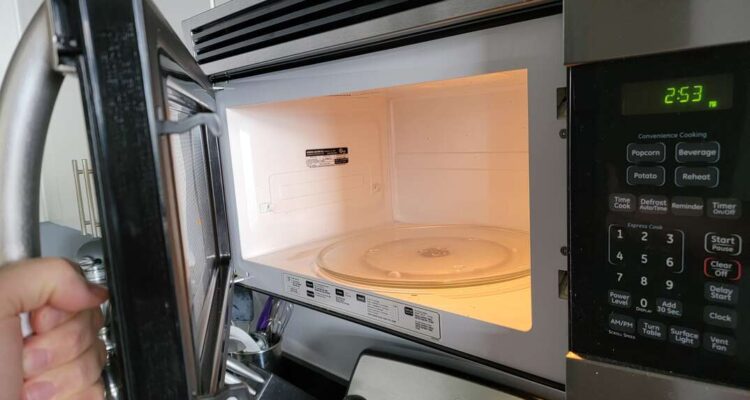
The turntable sits on a circular support ring and connects with a drive mechanism underneath. If the plate is not seated correctly, it may wobble, scrape, or make a repeated clicking sound during operation.
This can happen after removing the glass tray for cleaning or accidentally shifting it while placing food inside.
How to check it
- Switch off and unplug the microwave.
- Carefully remove the glass plate.
- Check the support ring and the area beneath the tray for food debris.
- Clean the accessible parts using a soft cloth.
- Reposition the roller ring and glass plate according to the manufacturer’s instructions.
Make sure the tray sits flat and securely. Check that your cookware fits comfortably on the plate and does not touch the interior walls.
If the noise continues after correct reassembly, the support ring or turntable motor may be worn.
2. Food Debris Is Causing Rattling or Popping
Food spills are another common reason a microwave starts making unusual sounds.
Dried sauce, grease, crumbs, and small pieces of food can collect on the cooking surface or around the turntable mechanism. When the appliance heats up, residue may produce popping or sizzling sounds.
Food with high moisture or fat content can also pop during heating. This is not always a sign of a mechanical problem.
What you can do
Unplug the microwave and allow it to cool. Remove the glass tray and roller ring if your model permits it, then clean the interior with a soft, damp cloth and a suitable mild cleaner.
Avoid abrasive pads, sharp tools, and harsh chemicals that could damage the interior coating.
Check the manufacturer’s instructions before cleaning removable parts. Dry everything thoroughly before reassembling the appliance.
If popping continues even after the interior is clean, or if you notice sparks, stop using the microwave and arrange a professional assessment.
3. The Microwave Is Making a Loud Buzzing Sound
A steady, low humming or buzzing sound is normal in many microwaves. However, a buzzing noise that suddenly becomes much louder, harsher, or irregular may indicate a problem.
Possible causes include a worn component, a faulty fan, or an issue involving the high-voltage system.
The magnetron, transformer, and related electrical components play important roles in producing the energy needed to heat food. Problems in this area require careful diagnosis.
Warning signs to watch for
- The buzzing is much louder than it used to be.
- The microwave makes a harsh electrical humming sound.
- Food no longer heats properly.
- The buzzing occurs alongside a burning smell.
- The appliance produces sparks or repeatedly stops during operation.
If the noise is unusually loud or occurs with any of these warning signs, stop the microwave and unplug it if you can do so safely.
Never open the outer cabinet to inspect the magnetron, transformer, capacitor, or other internal electrical parts. Microwave components can retain a dangerous electrical charge even after the appliance has been unplugged.
A qualified technician should diagnose and repair internal electrical faults.
4. A Worn Turntable Motor May Be Responsible
The turntable motor rotates the glass plate during cooking. Over time, its moving parts can wear down, potentially causing clicking, grinding, or humming noises.
You may notice that the glass plate moves slowly, stops intermittently, or struggles to rotate.
In some cases, the problem is actually a damaged coupler or roller ring rather than the motor itself.
You can safely inspect the removable glass plate and support ring for visible damage while the appliance is unplugged. However, diagnosing the motor generally requires access to internal components.
If cleaning and correct positioning do not resolve the noise, seek professional assistance rather than attempting to replace the motor yourself.
5. The Cooling or Ventilation Fan Is Noisy
Microwaves use fans to move air and manage heat. Over-the-range models may also have an exhaust fan that helps remove cooking fumes from the area above the stove.
If the fan becomes obstructed, loose, or worn, it may produce a loud whirring, rattling, squealing, or grinding sound.
A noisy fan may be more noticeable when the microwave starts, while it is heating food, or shortly after cooking ends.
What should you check?
First, identify when the sound occurs. Does it happen only while the microwave is heating, when the ventilation fan is switched on, or even when the appliance appears to be in standby mode?
Consult your user manual for instructions on cleaning any user-accessible filters. Some models have removable filters, while others require different maintenance procedures.
Do not insert tools into ventilation openings or remove the outer casing.
If the fan continues to make an unusual noise, arrange a service inspection. A worn fan motor or internal obstruction may need professional attention.
6. The Microwave Is Not Heating Properly
A loud noise combined with poor heating performance deserves particular attention.
If the microwave runs but food remains cold, the problem may involve the magnetron, diode, capacitor, or another component in the high-voltage system. However, poor heating can also have other causes, so noise alone cannot confirm which part has failed.
For example, if a microwave produces an unusually loud buzzing sound and no longer heats food as expected, continuing to operate it may not be a sensible choice.
Stop using the appliance and arrange a professional diagnosis.
Do not attempt electrical testing or component replacement yourself. These repairs require appropriate training and safety procedures.
7. Metal or Unsuitable Cookware May Be Causing Noise
Incorrect cookware can cause unusual sounds and, in some circumstances, sparks.
Metal objects, foil, metallic decorations, or unsuitable containers can interact with microwave energy in ways that may produce arcing or damage.
Some noises may also occur when a large container touches the microwave’s interior wall or vibrates against the glass tray.
How to prevent the problem
- Use containers labelled as microwave-safe.
- Follow the manufacturer’s instructions about metal and foil.
- Ensure dishes fit comfortably inside the cooking compartment.
- Keep containers centred on the glass tray.
- Remove packaging that is not suitable for microwave use.
If you see sparks or notice burning, stop the appliance immediately. Do not restart it simply to check whether the sound happens again.
8. The Microwave Is Making Noise Even When Not Cooking
Some microwaves may continue running a cooling fan briefly after a cooking cycle. This can be normal, depending on the model.
However, a strange or persistent noise while the microwave is idle may indicate a problem with a fan, control component, or another internal part.
Check your user manual to determine whether your model is designed to continue running a fan after cooking.
If the noise is new, unusually loud, or continues longer than expected, contact a qualified service technician. Do not remove the casing to investigate the source yourself.
9. When Should You Stop Using Your Microwave?
Not every sound requires immediate concern, but certain warning signs should be taken seriously.
Stop using your microwave if you notice:
- Sparks or repeated electrical popping.
- Smoke or a burning smell.
- A sudden, harsh buzzing or grinding sound.
- Damaged wiring, a damaged plug, or signs of overheating.
- A door that does not close properly.
- Damaged hinges, latches, or door seals.
- Repeated circuit-breaker trips.
If a fire starts inside the microwave, keep the door closed and disconnect power only if you can do so safely. Do not pour water into the appliance.
Health Canada advises that microwave ovens should be kept in good working order, that damaged doors and seals should not be ignored, and that repairs should be performed by qualified service technicians.
10. Repair or Replace a Noisy Microwave?
The best option depends on the appliance’s age, condition, and the cause of the noise.
A loose turntable, dirty roller ring, or damaged support may be relatively simple to address. A worn fan motor or turntable motor may also be repairable if the correct parts are available.
However, a major electrical fault may make replacement more practical, especially if the microwave is older or has developed several problems.
Consider these factors before deciding:
Age: An older appliance may have additional worn components.
Repair estimate: Compare the cost of diagnosis and repair with the price of a suitable replacement.
Availability of parts: Some components may be harder to source for older models.
Overall condition: An appliance with a single mechanical fault may be a better repair candidate than one with multiple issues.
Safety: Damage to the door, hinges, latch, or seal requires particular care.
If you need assistance identifying the cause, Microwave repair Saskatoon can be a starting point for exploring professional repair options in the local area.
A technician can assess the symptoms, explain the likely fault, and provide an estimate so you can make an informed decision.
How to Prevent Loud Microwave Noises
Regular maintenance can help reduce avoidable noise and keep your appliance in good working condition.
- Clean the interior regularly: Remove food spills before they harden.
- Keep the turntable correctly positioned: Make sure the glass plate and roller ring fit properly.
- Use suitable cookware: Avoid containers that are too large or inappropriate for microwave use.
- Do not run the microwave empty: Follow the manufacturer’s operating instructions.
- Clean accessible filters when recommended: This may help maintain airflow in compatible models.
- Address unusual noises early: A new grinding or harsh buzzing sound should not be ignored.
- Avoid DIY internal repairs: Leave electrical and high-voltage components to qualified technicians.
- Inspect the door and seal: Stop using the appliance if either is damaged.
These habits are helpful for Saskatoon homeowners who rely on their microwaves for daily cooking, especially during busy workdays and cold winter months.
Frequently Asked Questions
1. Why is my microwave suddenly making a loud noise?
A sudden increase in noise may be caused by a misaligned turntable, food debris, a worn motor, a noisy fan, or an internal electrical fault. If the sound is harsh or accompanied by poor heating, sparks, or a burning smell, stop using the appliance and arrange an inspection.
2. Is a buzzing sound normal in a microwave?
A low, steady hum is normal for many microwaves. A buzzing sound that becomes significantly louder, irregular, or harsh may indicate a problem that needs professional attention.
3. Why does my microwave make a grinding noise?
Grinding may come from a misaligned glass plate, a damaged roller ring, a worn turntable motor, or a fan problem. Clean and reposition accessible removable components first, but seek professional help if the noise continues.
4. Why is my microwave rattling while heating food?
The glass tray may be loose, the roller ring may be dirty, or cookware may be touching the interior wall. Check the removable parts and ensure the container fits properly.
5. Can I use my microwave if it is making loud noises?
If the sound is new, unusually loud, or accompanied by sparks, smoke, a burning smell, or poor heating, stop using the appliance. Consult the manufacturer’s instructions and arrange professional service if necessary.
6. Why does my microwave make noise but not heat food?
The cause may involve a high-voltage component or another internal fault. A loud buzz combined with poor heating should be professionally diagnosed. Do not open the cabinet or attempt electrical repairs yourself.
7. Why does my microwave fan sound so loud?
The fan may be obstructed, loose, or worn. On some models, a cooling fan may also continue running briefly after cooking. Consult the user manual and seek service if the noise is unusual or persistent.
8. How much does microwave noise repair cost in Saskatoon?
The cost depends on the cause, the model, replacement-part prices, and labour. A minor mechanical issue may cost less to address than a motor or electrical fault. Request an estimate before approving repairs.
9. Is a noisy microwave dangerous?
Not every noise indicates a safety problem, but unusual sounds can signal a mechanical or electrical fault. Stop using the microwave if you notice sparks, smoke, burning smells, damaged wiring, or door damage.
10. Should I repair or replace a noisy microwave?
Repair may be worthwhile when the appliance is in good condition and the fault is relatively simple. If it is old, has multiple problems, or needs an expensive repair, compare the estimate with the cost of replacement.
Final Thoughts
A microwave making loud noises may have a simple problem, such as a loose turntable or food debris, but it can also indicate a worn motor, a faulty fan, or an internal electrical issue.
Start with safe checks: clean the interior, inspect removable parts, reposition the glass tray, and make sure you are using suitable cookware. If the noise persists or the appliance shows warning signs, stop using it and seek professional assistance.
For homeowners in Saskatoon, responding early to unusual sounds can help prevent further damage and make it easier to decide whether repair or replacement is the better option. Most importantly, never attempt to repair high-voltage microwave components yourself.
Sources
- Health Canada —
- Bosch Home Appliances —
- Samsung Support —
- Frigidaire Parts Canada —
Refine the microwave article