Microwaves are common appliances in rental homes, apartments, basement suites, and other residential properties. For tenants, a working microwave makes everyday cooking and reheating food more convenient. For landlords, keeping appliances in good condition helps maintain the property’s value, supports tenant satisfaction, and reduces avoidable maintenance problems.
However, microwaves can develop faults over time. They may stop heating food, produce unusual noises, develop faulty buttons, or experience problems with their doors and turntables. When this happens in a rental unit, landlords need to determine the cause, communicate with tenants, and decide whether repairing or replacing the appliance is the most practical option.
In Saskatoon, where rental properties range from individual houses to multi-unit buildings, a consistent appliance maintenance plan can make property management easier. Knowing how to handle microwave problems can also help landlords respond efficiently without compromising tenant safety.
This guide explains common microwave problems in rental properties, landlord responsibilities, repair costs to consider, tenant communication, preventative maintenance, and situations where replacement may be more appropriate.
Why Microwave Maintenance Matters in Rental Properties
A microwave may seem like a small part of a rental property, but a malfunctioning appliance can create inconvenience and additional work for landlords.
1. It helps maintain tenant satisfaction
Tenants expect supplied appliances to work as intended. When a microwave stops heating or becomes unreliable, it can disrupt everyday routines.
Responding promptly and providing clear information about the next steps helps tenants feel that their concerns are being taken seriously.
2. It can reduce avoidable repair expenses
Small maintenance issues can sometimes become more serious when ignored. For example, a damaged door, unusual electrical noise, or repeated shutdown may indicate a problem that needs attention.
Early assessment can help identify the issue before further use causes additional damage.
3. It supports property upkeep
Appliances are part of the overall condition of a rental unit. Keeping them clean, functional, and safe contributes to the property’s general maintenance standards.
4. It helps landlords plan their budgets
When landlords record repair history, appliance age, and replacement expenses, they can make more informed decisions about future maintenance.
Instead of treating every microwave failure as an unexpected emergency, they can establish a reasonable appliance maintenance budget.
Common Microwave Problems in Rental Units
Microwave problems can occur for several reasons, including normal wear, accidental damage, electrical faults, or improper use. Identifying the symptoms helps landlords arrange the appropriate inspection.
Microwave Runs but Does Not Heat
A microwave may turn on, display the cooking time, and rotate the turntable without warming food.
Possible causes include a failed magnetron, a defective high-voltage component, or another internal electrical problem. The symptom alone does not identify the faulty part.
Landlords should advise tenants to stop using the appliance if it repeatedly fails to heat and arrange a professional assessment.
Microwave Door Does Not Close Properly
The door is essential to safe microwave operation. Damaged hinges, a faulty latch, or a warped door can prevent the appliance from closing correctly.
Tenants should not force the door shut or attempt to modify the latch. If the door is damaged or does not close securely, the microwave should remain out of use until it has been assessed.
Turntable Stops Rotating
A turntable that does not rotate can result from incorrect placement, a dirty roller ring, or a mechanical fault.
If the appliance is switched off and cool, a tenant may be able to check that the removable glass plate is seated correctly and that accessible food debris has been cleaned away according to the manual.
If the turntable still does not work, the landlord should arrange an inspection rather than asking the tenant to dismantle the appliance.
Buttons or Touch Controls Stop Responding
Unresponsive buttons can result from a control-panel fault, moisture, electrical problems, or a temporary operating issue.
Tenants should follow the manufacturer’s basic troubleshooting instructions. They should not spray cleaning products directly onto the control panel or open the appliance to inspect its wiring.
Unusual Noises, Sparks, or Burning Smells
A new humming sound, repeated sparking, smoke, or an electrical burning smell may indicate a serious problem.
The tenant should stop using the microwave immediately. If there is smoke or fire, they should keep away and contact emergency services when necessary.
A landlord should arrange qualified assistance before returning the appliance to service.
What Are a Landlord’s Responsibilities?
Landlord responsibilities depend on the tenancy agreement and applicable provincial or local laws. In Saskatchewan, landlords should understand the legal requirements governing rental housing, maintenance, and the condition of supplied appliances.
A microwave’s status can matter. An appliance supplied as part of the rental property may be treated differently from a tenant-owned appliance.
Landlords should review the lease, applicable Saskatchewan tenancy requirements, and any relevant building or safety rules before deciding who is responsible for a particular repair.
Maintain appliances supplied with the rental
If a microwave is included with the rental unit, landlords should establish a process for handling reports of malfunction or damage.
This generally involves assessing the problem, determining the necessary work, and deciding whether repair or replacement is appropriate.
Respond to safety concerns promptly
A microwave showing signs of electrical damage should not be left in use while the issue is investigated.
Landlords should communicate clear safety instructions to tenants and arrange a suitable assessment.
Understand responsibility for tenant-caused damage
Not every repair is necessarily the landlord’s financial responsibility. Damage caused by misuse or negligence may be treated differently from ordinary wear and tear, depending on the circumstances and applicable law.
Landlords should document the condition of the appliance, review the tenancy agreement, and follow the proper legal process before charging a tenant.
Avoid making automatic deductions or assigning blame without sufficient evidence.
Keep appropriate records
Maintain records of maintenance requests, inspections, repair invoices, replacement purchases, and relevant tenant communications.
Good documentation helps landlords track appliance performance and explain decisions if questions arise later.
For legal questions about Saskatchewan tenancy obligations, consult the provincial government’s official tenancy information or seek qualified legal advice.
How Landlords Should Handle a Microwave Repair Request
A clear process makes it easier to manage repairs across multiple rental units.
Step 1: Ask the Tenant to Describe the Problem
When a tenant reports a fault, ask for a brief description of what happened.
Useful questions include:
- Does the microwave turn on?
- Does it heat food normally?
- Is there an unusual sound?
- Does the turntable rotate?
- Is the door damaged or difficult to close?
- Has the appliance produced smoke, sparks, or a burning smell?
Ask when the problem started and whether it occurs every time the microwave is used.
These details can help determine how urgently the appliance needs attention.
Step 2: Provide Immediate Safety Instructions
If the microwave produces smoke, sparks, an electrical burning smell, or repeated breaker trips, instruct the tenant to stop using it.
The tenant should not open the cabinet, remove internal components, or attempt electrical repairs.
If there is no obvious safety hazard, the tenant may follow simple troubleshooting steps from the manufacturer’s manual, such as checking that the door is properly closed or that the turntable is correctly positioned.
Step 3: Arrange a Professional Assessment
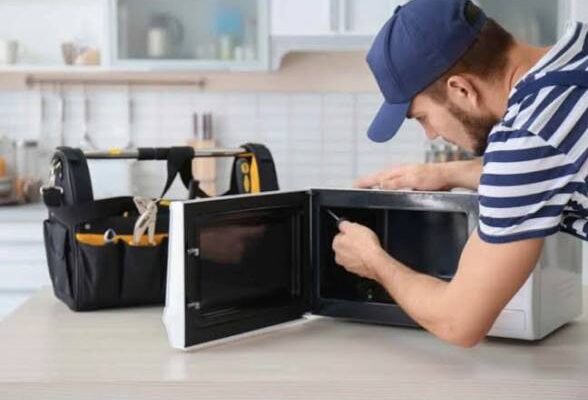
Choose a qualified appliance technician who can inspect the microwave and explain the likely cause of the problem.
For landlords managing several units, keeping contact details for a reliable repair provider can simplify future maintenance requests.
Professional Microwave repair Saskatoon services can help identify appliance faults and provide information to support a repair-or-replacement decision.
Before authorising the work, ask for a clear explanation of the diagnosis, the expected cost, and whether the proposed repair is likely to be economical.
Step 4: Decide Whether to Repair or Replace
Once the fault is identified, compare the repair estimate with the cost of replacing the microwave.
Consider the appliance’s age, condition, previous repair history, parts availability, and expected remaining service life.
Step 5: Keep the Tenant Informed
Tell the tenant when the inspection is expected, whether the appliance needs to remain unused, and what will happen after the assessment.
If replacement is necessary, explain the expected arrangement without promising a completion date that has not been confirmed.
Clear communication reduces uncertainty and helps prevent repeated enquiries.
Repair or Replace: What Makes Financial Sense?
Landlords often need to balance immediate costs with long-term value.
When repair may be worthwhile
Repair may be appropriate when the microwave is relatively new, the fault is limited, and compatible parts are available at a reasonable price.
For example, a replaceable turntable component or another economical repair may be worth considering if the rest of the appliance is in good condition.
A technician should confirm the cause before any parts are ordered.
When replacement may be better
Replacement may be the more practical option when the microwave has multiple faults, extensive electrical damage, a damaged door, or a repair estimate that approaches the cost of a suitable new appliance.
Older appliances may also have limited parts availability, making future repairs more difficult.
For rental properties, replacement has another advantage: a landlord can choose a model that fits the available space, meets household needs, and is straightforward to maintain.
Consider the total cost
The lowest immediate price does not always represent the best value.
Compare the complete repair cost with the purchase price of a suitable replacement. Include installation, delivery, disposal, and any necessary cabinet or electrical work.
Also consider how frequently the existing appliance has required attention.
A simple maintenance record can help identify whether repeated repairs are becoming uneconomical.
Preventative Microwave Maintenance for Landlords
Regular maintenance can reduce avoidable problems and help landlords identify faults earlier.
Include the microwave in routine inspections
During appropriate property inspections, check the appliance’s external condition, door, visible controls, and general cleanliness.
Follow the tenancy agreement and applicable entry requirements when arranging inspections. Landlords should not enter occupied rental units without following the required notice and access rules, except where a lawful exception applies.
Encourage safe everyday use
Provide tenants with the manufacturer’s instructions when possible. Explain the importance of using microwave-safe containers, avoiding unauthorised metal objects, and cleaning food spills.
Tenants should also know not to operate an appliance with a damaged door or continue using it after signs of electrical trouble.
Keep ventilation areas clear
Microwaves need suitable ventilation. Landlords should make sure the appliance is installed according to the manufacturer’s instructions and that external vents are not blocked by nearby items.
Do not ask tenants to dismantle the appliance to clean internal components.
Track appliance age and repair history
Record the model, installation or purchase date when known, repair dates, and replacement parts.
These records help landlords budget for future expenses and identify appliances that may be nearing the end of their useful life.
Use suitable replacement appliances
When replacing a microwave, select a model that fits the designated space and meets the property’s practical needs.
For built-in or over-the-range models, installation requirements may be more complicated than for countertop units. Follow the manufacturer’s installation instructions and use qualified assistance where required.
Managing Microwave Repairs Across Multiple Rental Units
Landlords with several properties can benefit from a standard maintenance process.
Create a simple appliance inventory showing each unit’s microwave model, approximate age, and repair history. Keep digital copies of invoices and record recurring problems.
A standard tenant reporting form can collect essential information, including the fault, when it began, and whether there are safety concerns.
It is also helpful to distinguish urgent safety issues from ordinary performance problems. Smoke, fire, electrical burning smells, and damaged doors require immediate attention, while a minor cosmetic issue may not need the same response.
If the same appliance model develops repeated problems across several units, review the maintenance records before deciding whether future replacements should use a different model.
A consistent process saves time, improves budgeting, and makes it easier to respond fairly to tenants.
Frequently Asked Questions
1. Are landlords responsible for repairing a microwave in a rental unit?
Responsibility depends on the tenancy agreement, who supplied the appliance, and applicable Saskatchewan tenancy requirements. If the microwave is provided as part of the rental, the landlord should review the relevant obligations and arrange appropriate maintenance.
2. Should tenants pay for a broken microwave?
Not automatically. Ordinary wear and tear differs from damage caused by misuse or negligence. Landlords should investigate the circumstances, review the agreement, and follow applicable legal procedures before seeking payment.
3. What should a tenant do if a microwave stops heating?
The tenant should stop relying on the appliance and report the problem to the landlord. A qualified technician can determine whether the cause is an internal component fault or another issue.
4. How quickly should a landlord respond to a microwave problem?
The response should reflect the circumstances, safety risks, and applicable obligations. Smoke, sparking, electrical burning smells, and a damaged door require urgent attention. Less serious faults can be assessed according to their impact and the available repair arrangements.
5. Is it better to repair or replace a rental property’s microwave?
Repair may be worthwhile when the appliance is in good condition and the fault is economical to fix. Replacement may be preferable when the microwave is old, repeatedly breaks down, or needs expensive repairs.
6. Can landlords ask tenants to repair a microwave themselves?
Landlords should not ask tenants to perform electrical repairs or open the appliance cabinet. Simple checks permitted by the manufacturer’s instructions may be reasonable, but internal diagnosis and repair should be left to qualified professionals.
7. What information should tenants provide when reporting a fault?
Tenants should describe whether the microwave heats food, whether its controls respond, and whether unusual sounds, smells, sparks, or shutdowns occur. Photographs of visible external damage may also help, provided they can be taken safely.
8. How can landlords prevent repeated microwave repairs?
Regular cleaning, appropriate installation, safe-use instructions, and timely professional assessment can help reduce avoidable problems. Recording repair history also helps landlords identify appliances that may need replacement.
9. Should a landlord provide a replacement microwave while repairs are underway?
This depends on the tenancy agreement, applicable obligations, circumstances, and the landlord’s chosen response. Landlords should communicate clearly with tenants and consider practical options while the appliance is unavailable.
10. How can Saskatoon landlords manage microwave maintenance more efficiently?
Maintain an appliance inventory, keep repair records, establish a clear process for tenant reports, and use qualified technicians for diagnosis. Planning ahead can make budgeting and maintenance decisions easier.
Conclusion
Microwave maintenance is a practical part of managing rental properties. When an appliance fails, landlords need to assess the problem, communicate with tenants, consider their responsibilities, and choose between repair and replacement.
A consistent process helps prevent unnecessary expenses and supports a better rental experience. Regular inspections, safe-use guidance, and accurate maintenance records can also make future decisions easier.
For landlords in Saskatoon, the most important principle is to address faults promptly without asking tenants to perform unsafe electrical work. When a microwave shows signs of serious malfunction, professional assessment is the safest way to determine what needs to happen next.
Suggested SEO metadata
Meta title: Microwave Repair for Rental Units and Landlords in Saskatoon
Meta description: Learn how Saskatoon landlords can manage microwave repairs, handle tenant reports, compare repair and replacement costs, and maintain rental appliances safely.