A microwave oven makes everyday cooking faster and more convenient. From reheating leftovers to preparing quick meals, many households depend on it daily. However, when a microwave develops an electrical fault, its performance can change suddenly. One possible cause is a damaged high-voltage capacitor.
The capacitor is an important part of the microwave’s heating system. When it fails, the appliance may stop heating food, make unusual electrical noises, or experience other operational problems. Unfortunately, these symptoms can also indicate faults with other internal components, so identifying the exact cause requires professional testing.
For homeowners in Saskatoon, understanding the warning signs of capacitor failure can help prevent further damage and reduce safety risks. It is equally important to know which problems can be checked safely and which require a qualified appliance technician.
This guide explains how microwave capacitors work, the common symptoms of failure, possible causes, professional diagnosis, and factors to consider when deciding whether to repair or replace your appliance.
What Is a Microwave Capacitor?
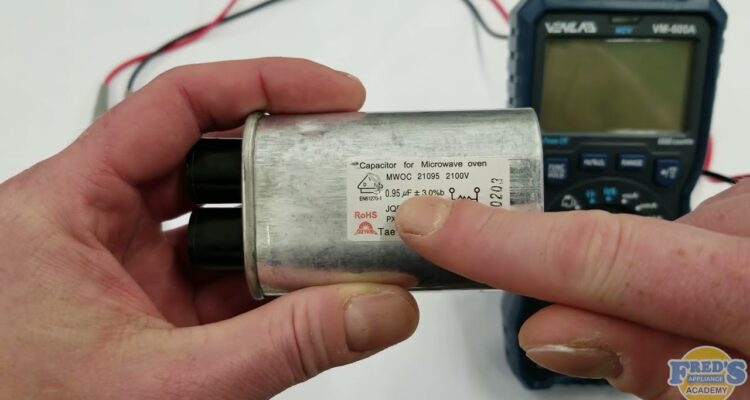
A microwave capacitor is an electrical component that stores energy temporarily. In many conventional microwave ovens, it works with the high-voltage transformer and diode to provide the electrical conditions needed by the magnetron.
The magnetron generates the microwave energy that heats food. If the high-voltage circuit does not operate correctly, the appliance may run without producing enough energy to heat its contents.
Modern microwave designs can differ. Some use inverter-based power systems, so their internal components and diagnostic requirements may not be the same as those of conventional models.
A faulty capacitor can interfere with the heating process, but it is not the only possible cause of a microwave malfunction. A damaged diode, magnetron, transformer, wiring connection, or control component may produce similar symptoms.
Important safety warning: A microwave capacitor can retain a dangerous electrical charge even after the appliance has been unplugged. Never remove the cabinet, touch internal electrical components, or attempt to discharge or replace the capacitor yourself.
1. Your Microwave Runs but Does Not Heat Food
One of the most common warning signs of a high-voltage circuit problem is a microwave that appears to operate normally but leaves food cold.
You might notice that the display lights up, the timer counts down, the fan runs, and the turntable rotates. However, the food remains at almost the same temperature.
A failed capacitor can prevent the high-voltage circuit from supplying the magnetron with the electrical conditions it needs to generate microwave energy.
Nevertheless, other faults can cause exactly the same problem. A defective magnetron, damaged diode, failed transformer, or inverter malfunction may also prevent heating.
What should you do?
If there are no signs of smoke, burning, sparking, or electrical damage, you can perform a simple external check using a microwave-safe cup of water and the manufacturer’s normal operating instructions.
If the water does not warm as expected, stop using the appliance and arrange a professional inspection. Do not keep running the microwave in the hope that it will start heating again.
A technician can test the relevant components and determine whether the capacitor is actually responsible.
2. Unusual Humming or Buzzing Sounds
Most microwaves make some noise during operation. The cooling fan, turntable motor, and electrical components all contribute to the normal operating sound.
A sudden change in that sound deserves attention.
If your microwave develops a loud electrical hum, harsh buzzing, or an unfamiliar vibrating noise, a fault may exist in its electrical or mechanical systems. A capacitor problem is one possibility, particularly if the noise occurs alongside a loss of heating.
Other potential causes include a failing magnetron, a defective transformer, loose internal components, or a problem with the cooling fan.
Pay attention to when the noise begins. For example, does it occur immediately after pressing the Start button? Does it happen only when the microwave attempts to heat food? Has the sound become louder over several days?
These details can help a technician narrow down the possible causes.
If the noise is accompanied by smoke, a burning smell, or visible sparking, stop using the microwave immediately. Do not open the cabinet to investigate the source.
3. A Burning Smell Comes from the Microwave
A burning smell can indicate anything from burnt food residue to a serious electrical fault.
When a high-voltage component becomes damaged or overheats, it may produce an unusual electrical or plastic-like odour. A failing capacitor may be involved, but the smell alone cannot establish which component has failed.
Other possible causes include damaged wiring, overheating insulation, food splashes, or grease accumulating inside the cooking cavity.
Consider whether the smell started after food spilled or whether it appears whenever the microwave operates. Food-related smells may come from residue, while an electrical odour can indicate a more serious internal problem.
If you suspect an electrical fault, stop using the appliance and arrange an inspection. Never repeatedly switch it on to see whether the smell disappears.
If there is smoke or fire, keep away from the appliance and contact emergency services when necessary. Disconnect power only if it is safe to do so.
4. The Microwave Heats Food Inconsistently
Another possible warning sign is inconsistent heating.
Perhaps the microwave heats a meal normally one day but leaves it cold the next. It might also stop heating during a cycle or work again after being left unused for some time.
These symptoms may indicate an intermittent electrical fault. A deteriorating capacitor could contribute to the problem, although overheating protection, loose connections, a failing magnetron, or another component may be responsible.
Try to remember when the problem occurs. Does it happen after several minutes of operation? Does the microwave fail more often during repeated cooking cycles? Does it stop working without warning?
Record these observations without repeatedly operating an appliance that appears faulty.
Intermittent problems can become more serious if the underlying cause remains unresolved. Professional diagnosis helps identify the defective component and determine whether further damage has occurred.
5. The Microwave Trips the Circuit Breaker
A microwave that repeatedly trips a circuit breaker may have an electrical problem requiring immediate attention.
A damaged capacitor can contribute to a fault in the high-voltage circuit, but other components, a damaged power cord, or an issue with the household electrical installation may also be responsible.
Circuit breakers interrupt power when they detect certain unsafe electrical conditions. Repeatedly resetting a breaker without investigating the cause is not a safe solution.
If the breaker trips when you start the microwave, stop using the appliance. Do not repeatedly reconnect it, replace the breaker with one of a higher rating, or attempt to bypass the problem with an extension cord.
If other appliances also cause the breaker to trip, a qualified electrician may need to inspect the household circuit. An appliance technician can separately assess the microwave.
Identifying the source of the problem is more important than simply restoring power.
6. The Microwave Sparks During Operation
Sparking inside a microwave is not a typical sign of capacitor failure, but it can indicate a problem that should not be ignored.
Common causes include accidentally leaving metal inside the cooking cavity, damaged interior surfaces, a contaminated waveguide cover, or an electrical fault.
If you notice sparks, stop the microwave immediately. Disconnect the power if it is safe to reach the plug, and allow the appliance to cool.
Afterward, you may inspect the cooking cavity for obvious food residue or a metal object. Do not remove internal covers or attempt to access electrical components.
If there is no obvious external cause, or if the appliance shows scorch marks, smoke, or signs of electrical damage, do not use it again until it has been inspected.
Continuing to operate a sparking microwave can worsen damage and create additional safety risks.
7. The Microwave Shuts Off Unexpectedly
Unexpected shutdowns may indicate an overheating problem, an electrical fault, or an issue with the control system.
Some microwave ovens include thermal protection that interrupts operation when certain components become too hot. Restricted ventilation, a malfunctioning cooling fan, or a defective electrical component may contribute to repeated shutdowns.
A capacitor fault is one possible explanation, but it should not be assumed without testing.
Check the appliance’s external ventilation openings and make sure nearby objects are not blocking them. Follow the manufacturer’s instructions for clearance and installation.
If the microwave continues to shut down unexpectedly, stop using it and arrange a professional inspection. Do not remove the cabinet to check the fan, capacitor, or wiring.
Repeated shutdowns are a warning that something may be wrong, even if the appliance starts working again after cooling down.
8. Visible Signs of Internal Electrical Damage
A damaged capacitor may show physical changes, such as a deformed casing or evidence of overheating. Some electrical failures may also leave marks around connections or nearby components.
However, the capacitor is located inside the appliance cabinet. You should never open the microwave simply to look for these signs.
Unplugging a microwave does not guarantee that its internal electrical components are safe to touch. A capacitor may retain a dangerous charge, potentially causing a severe or fatal electric shock.
Only a qualified technician with suitable equipment and training should inspect and test the high-voltage circuit.
If your microwave has already been opened and internal components are exposed, do not touch them or reconnect the appliance. Keep other household members away until it can be assessed safely.
Why Do Microwave Capacitors Fail?
Several factors can contribute to capacitor failure.
1. Normal ageing
Electrical components can deteriorate over time. Repeated use and long-term exposure to heat may gradually affect their performance.
2. Excessive heat
Poor ventilation or a failing cooling fan can contribute to overheating. Prolonged exposure to elevated temperatures may shorten the lifespan of internal components.
3. Electrical stress
Electrical disturbances or abnormal operating conditions can place additional stress on the microwave’s circuitry. However, a power surge does not automatically mean that the capacitor has failed.
4. Component defects
A manufacturing defect or premature component deterioration can cause a capacitor to fail earlier than expected.
5. Problems elsewhere in the circuit
A fault in another high-voltage component may affect connected parts. For this reason, replacing a capacitor without checking the surrounding circuit may not solve the original problem.
How Do Technicians Diagnose Capacitor Failure?
Professional diagnosis involves examining the microwave’s symptoms and testing the relevant components safely.
Depending on the model and reported problem, a technician may:
- Review the microwave’s operating history and reported symptoms.
- Check the external condition, power cord, and visible signs of damage.
- Inspect relevant internal components using appropriate high-voltage safety procedures.
- Test the capacitor with suitable equipment.
- Examine associated components, such as the diode, magnetron, transformer, or inverter, where applicable.
- Determine whether the fault can be repaired safely and economically.
The technician must distinguish capacitor failure from other problems that produce similar symptoms.
If you are experiencing persistent heating problems or unusual electrical noises, professional Microwave repair Saskatoon services can help assess the appliance and identify the appropriate next steps.
Should You Repair or Replace the Microwave?
The best decision depends on the appliance’s condition, age, repair estimate, and replacement cost.
Age of the appliance: A relatively new microwave may be worth repairing if the problem is limited to one replaceable component.
Overall condition: If the microwave has several faults, significant internal damage, or a damaged door, replacement may be the more practical option.
Repair cost: Compare the complete repair estimate with the cost of a suitable replacement. Include any installation or disposal expenses where relevant.
Parts availability: Some models may require components that are difficult or expensive to obtain.
Warranty coverage: Check your warranty before arranging paid repairs. Avoid opening the appliance yourself, as doing so may affect warranty coverage under the manufacturer’s terms.
Ask the technician to explain the diagnosed fault, the proposed repair, and any relevant costs before authorising the work.
How to Reduce the Risk of Microwave Problems
Although no maintenance routine can prevent every electrical failure, sensible use can help keep a microwave in good condition.
- Keep ventilation openings clear and follow the manufacturer’s installation instructions.
- Clean food spills and grease from the cooking cavity regularly.
- Use microwave-safe containers and follow the manufacturer’s guidance about metal objects.
- Avoid operating the appliance if the door, hinges, or latch are damaged.
- Stop using the microwave if you notice smoke, unexplained sparks, or an electrical burning smell.
- Follow the recommended cleaning and maintenance instructions.
- Seek professional assistance when the microwave repeatedly fails to heat or shuts down unexpectedly.
Never try to discharge a capacitor with a screwdriver or another improvised tool. Do not touch the internal wiring, magnetron, or other high-voltage components.
When Should Saskatoon Homeowners Call a Technician?
A professional inspection is advisable if your microwave runs without heating, develops a persistent electrical hum, repeatedly trips a breaker, or shuts down unexpectedly.
Smoke, flames, unexplained sparking, and electrical burning smells require immediate attention. Stop using the appliance and keep away from any visible electrical damage.
When seeking Microwave repair Saskatoon, provide the technician with the appliance’s make and model and describe the symptoms clearly. Mention when the problem began and whether you noticed unusual sounds, smells, or shutdowns.
This information can help the technician plan the inspection and identify possible causes more efficiently.
Remember that a symptom does not confirm capacitor failure. Professional testing is the safest way to determine the actual problem and decide whether repair or replacement is appropriate.
Frequently Asked Questions
1. What are the common signs of a failed microwave capacitor?
Possible symptoms include failure to heat food, unusual electrical humming, and intermittent operation. These signs can also indicate other component failures, so testing is necessary to confirm the cause.
2. Can a microwave run if its capacitor has failed?
Yes. Some microwaves may still display the time, operate the fan, or rotate the turntable even when the high-voltage circuit cannot heat food properly.
3. Is a microwave capacitor dangerous after unplugging?
Yes. A high-voltage capacitor can retain a dangerous electrical charge after the microwave has been disconnected from power. Never touch or attempt to discharge it yourself.
4. Can I replace a microwave capacitor at home?
Homeowners without appropriate training should not attempt this repair. The internal high-voltage circuit can cause severe electric shock, even when the appliance is unplugged.
5. Why does my microwave hum but not heat?
A faulty capacitor is one possible cause. A defective magnetron, diode, transformer, or inverter may produce similar symptoms. A technician can determine which component has failed.
6. Can a faulty capacitor trip the circuit breaker?
It can contribute to an electrical fault in some circumstances. However, a damaged power cord, another faulty component, or a household wiring problem may also be responsible.
7. Does a burning smell mean the capacitor has failed?
Not necessarily. Burnt food residue, damaged wiring, overheating insulation, and other electrical components can produce unpleasant smells. Stop using the appliance if an electrical fault is suspected.
8. How do technicians test a microwave capacitor?
Qualified technicians follow appropriate high-voltage safety procedures and use suitable testing equipment. They may also inspect connected components to identify the underlying cause.
9. Is capacitor replacement cheaper than buying a new microwave?
It depends on the model, parts availability, labour cost, and overall condition of the appliance. Compare a professional repair estimate with the cost of a suitable replacement before deciding.
10. How can I prevent microwave capacitor failure?
You cannot prevent every component failure, but keeping ventilation openings clear, cleaning the cooking cavity, and using the appliance correctly may help reduce avoidable problems. Arrange professional inspection when warning signs appear.
Refine the article