Vinyl records offer a warm, detailed listening experience that many music lovers enjoy. However, to get the best sound from a record player, you need to keep its needle in good condition. Also known as a stylus, the needle follows the tiny grooves in a vinyl record and converts their movement into an audio signal.
Over time, the stylus wears down, becomes damaged, or collects dirt that affects playback. Using a worn needle for too long can reduce sound quality and potentially damage your valuable records. Fortunately, replacing it at the right time can help restore clear sound and protect your vinyl collection.
This guide explains when to replace a turntable needle, how to choose the correct replacement, and how to install it safely. It also explains when professional assistance may be the better option for vinyl enthusiasts in Saskatoon.
What Is a Turntable Needle?
A turntable needle, or stylus, is the small component that makes contact with the grooves of a vinyl record. It is usually attached to a delicate metal or plastic arm called a cantilever, which transfers movement to the cartridge.
The cartridge converts these movements into an electrical signal. Your amplifier or receiver then processes that signal and sends it to your speakers.
Although the needle looks tiny, it plays a major role in sound quality. A clean, correctly installed stylus can reproduce music accurately, while a worn or damaged one may produce distortion, excessive noise, or skipping.
It is important to understand that the stylus and cartridge are not always the same thing. Some turntables allow you to replace just the stylus, while others require a cartridge replacement or specialist service.
When Should You Replace a Turntable Needle?
There is no single replacement schedule that applies to every turntable. Stylus life depends on the model, the shape and material of the tip, how frequently you play records, and how well you maintain your equipment.
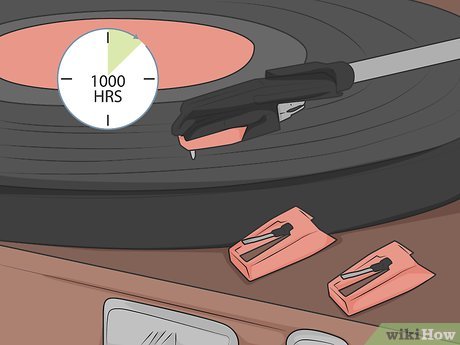
Some manufacturers recommend replacement after approximately 300–500 hours of use for certain models, while other stylus designs may last longer. Always check the instructions for your specific turntable and replacement stylus. Audio-Technica, for example, provides model-specific replacement guidance on its official support website.
Here are the main signs that your needle may need replacing.
1. Music Sounds Distorted
One of the first warning signs is a change in sound quality. Vocals may sound harsh, high notes may become unpleasant, and instruments may lose their usual clarity.
Distortion can also result from dirty records, incorrect tracking force, a damaged cartridge, or problems elsewhere in the audio system. If cleaning your records does not improve playback, inspect the stylus and check the manufacturer’s troubleshooting guidance.
2. Records Start Skipping
A stylus that repeatedly jumps across a record can interrupt songs and make listening frustrating.
However, skipping does not automatically mean the needle is worn out. Dust, scratches, an uneven surface, incorrect tracking force, and a poorly balanced tonearm can cause similar problems.
First, check whether the issue happens with multiple clean records. If it does, inspect the stylus carefully without touching its tip. A bent cantilever or visibly damaged needle should be replaced or professionally assessed before further playback.
3. You Hear More Surface Noise
Some crackling and background noise are normal when playing older vinyl. However, a noticeable increase in noise may indicate a dirty record, a dirty stylus, or worn equipment.
Use a suitable record-cleaning brush and a stylus-cleaning product approved by the manufacturer. Avoid household cleaners and never scrub the delicate needle with excessive force.
If the noise continues after careful cleaning, the stylus may be worn or another part of the turntable may need attention.
4. High-Frequency Detail Has Disappeared
A worn needle may struggle to track the record grooves accurately. Music can begin to sound dull, with less detail in cymbals, strings, vocals, and other high-frequency sounds.
Because this change often happens gradually, you may not notice it immediately. Comparing familiar records can help you identify whether playback quality has declined.
5. The Needle Looks Bent or Damaged
Inspect the stylus under good lighting without touching it. Look for an obviously bent cantilever, a loose stylus assembly, or other visible damage.
The actual stylus tip is extremely small, so ordinary visual inspection may not reveal wear. Never attempt to straighten a damaged cantilever or reshape the needle yourself.
If the stylus is visibly damaged, stop playing records until it has been replaced or checked by a qualified technician.
How to Choose the Correct Replacement Needle
Buying the right replacement is just as important as installing it properly. A stylus that looks similar to your original one may not fit your cartridge or perform correctly.
Identify Your Turntable Model
Start by checking the model number on the turntable, its label, or its user manual. Then find the manufacturer’s recommended replacement stylus.
If the turntable uses a replaceable cartridge, identify the cartridge model as well. The cartridge number may be different from the turntable model number.
Check Compatibility
Not every stylus fits every cartridge. Before ordering, confirm that the replacement is approved for your specific cartridge or turntable.
Check the manufacturer’s compatibility list or contact an authorised retailer if you are uncertain. Avoid choosing a needle based only on appearance or price.
Understand Stylus Types
Different stylus designs offer different performance characteristics.
- Conical stylus: A common design that is often suitable for everyday listening.
- Elliptical stylus: Can trace certain groove details more accurately, depending on the cartridge and record condition.
- Advanced-profile stylus: Designs such as line-contact styles can provide detailed groove tracing when matched with a compatible system.
A more expensive stylus is not automatically the best choice for every record player. Compatibility, correct setup, and your listening needs should guide the decision.
Consider the Cartridge Type
Moving-magnet (MM) cartridges often have replaceable stylus assemblies. Many moving-coil (MC) cartridges, however, do not allow users to replace the stylus tip alone. Depending on the design, the complete cartridge may need replacement or specialist servicing.
If you cannot identify your cartridge type, consult the manual or ask an audio technician before buying parts.
How to Replace a Turntable Needle Safely
Many turntables have user-replaceable styluses, but the removal and installation method varies by model. Always follow the instructions supplied with your equipment rather than forcing a part into place.
Step 1: Turn Off and Unplug the Turntable
Switch off the turntable and disconnect its power supply. If your system includes an amplifier or powered speakers, turn those off as well.
Move the turntable to a stable, well-lit surface. Keep drinks, loose objects, and anything that could damage the needle away from your workspace.
Step 2: Secure the Tonearm
Return the tonearm to its rest and secure it using the tonearm clip if available. If the model has a removable headshell, follow the manufacturer’s instructions for removing it.
The tonearm and cartridge are delicate. Support the appropriate part firmly without putting pressure on the stylus or cantilever.
Step 3: Remove the Old Stylus
Check the manual to determine the correct removal direction. Some stylus assemblies pull away at a particular angle, while others require a specific movement to release them.
Hold the cartridge or headshell steady and handle only the designated stylus housing. Do not pull on the needle itself, touch the cantilever, or apply unnecessary force.
If the stylus will not release easily, stop and check the instructions. Forcing it can damage the cartridge.
Step 4: Install the New Stylus
Keep the protective cover attached if the manufacturer’s instructions recommend doing so during installation.
Align the replacement with the cartridge’s mounting point and follow the specified insertion direction. Push gently until it is fully seated. Some models click into position, while others use a different fitting method.
Check that the stylus sits evenly against the cartridge body. If there is an unexpected gap or the assembly appears crooked, do not play a record until the installation has been checked.
Step 5: Inspect the Installation
Before reconnecting the turntable, confirm that the stylus is secure and the tonearm is undamaged. Remove any protective cover only when the manufacturer recommends it for playback.
If your turntable has a detachable headshell, make sure it is correctly secured to the tonearm.
Step 6: Test Playback Carefully
Reconnect the equipment and begin with a clean record that you do not mind using for a brief test. Lower the tonearm using the cueing lever rather than dropping it onto the record.
Listen at a moderate volume for skipping, distortion, or unusual noises. If playback is unstable, stop the turntable and check the setup. Do not repeatedly play a record with a potentially damaged or incorrectly installed stylus.
For further guidance, consult the instructions from your turntable or cartridge manufacturer. Ortofon also explains stylus replacement and cartridge setup in its official FAQ and installation guides.
Common Mistakes to Avoid During Needle Replacement
Even a compatible stylus can be damaged during installation if it is handled carelessly. Avoid these common mistakes:
Touching the needle tip: Finger pressure can damage the delicate assembly or leave contaminants on it.
Buying an incompatible stylus: A replacement that does not match the cartridge may not fit securely or track records correctly.
Forcing the assembly into place: If the part does not fit smoothly, check the model number and instructions instead of applying pressure.
Ignoring tracking force: The tonearm must apply the correct pressure to the record. Too much or too little can affect tracking and sound quality. Follow the turntable or cartridge manufacturer’s recommended setting.
Playing records with a damaged stylus: A bent or worn needle can compromise sound quality and damage vinyl. Stop playback until the issue is resolved.
Forgetting regular cleaning: Dust and debris can build up around the stylus and affect playback. Clean it using a method approved for your specific model.
Can You Replace a Turntable Needle Yourself?
You can often replace a stylus yourself if the manufacturer identifies it as user-replaceable and provides clear instructions. Basic replacement usually requires careful handling, good lighting, and the correct part.
Professional assistance is a better option when the stylus is stuck, the cartridge is damaged, the cantilever is bent, or the cartridge type is unclear. You may also need expert help if the turntable requires cartridge alignment, tracking-force adjustment, or other setup work.
A technician can inspect the cartridge, confirm compatibility, and help identify whether poor playback comes from the stylus or another component.
For vinyl owners who need help diagnosing sound problems, Audio repair Saskatoon is a relevant service to explore. Professional assessment can be especially useful when replacing the needle does not resolve distortion, skipping, or other playback issues.
How to Extend the Life of Your New Stylus
A few simple habits can help protect your replacement needle and your records.
- Clean records before playing them to reduce dust and debris.
- Use a stylus brush or cleaning product approved by the manufacturer.
- Keep the turntable covered when it is not in use.
- Use the tonearm cueing lever to lower and raise the needle gently.
- Avoid touching the stylus tip or cantilever.
- Check tracking force and anti-skating settings according to the manual.
- Store replacement styli in their protective packaging.
- Keep a rough record of listening hours so you can follow the manufacturer’s replacement guidance.
Avoid cleaning methods that involve excessive liquid or pressure. The stylus assembly is delicate, and incorrect cleaning can cause damage even when the needle is relatively new.
When Should You Seek Professional Turntable Repair?
Needle replacement may not solve every turntable problem. If the record player continues to skip, produces one-sided sound, loses volume, or develops persistent distortion after a correct installation, another fault may be responsible.
Possible causes include cartridge wiring problems, an incorrectly aligned cartridge, tonearm damage, faulty connections, or issues with the amplifier and speakers.
If the turntable has been dropped or the tonearm appears bent, avoid further use until it has been inspected. Continuing to play records with damaged components may create additional problems.
For local help, Audio repair Saskatoon provides a starting point for exploring audio repair services. Describe the symptoms, the turntable model, and any replacement parts you have already tried so the issue can be assessed more effectively.
Conclusion
Replacing a turntable needle at the right time helps preserve sound quality and protects your vinyl collection. Distortion, skipping, increased noise, and visible damage are useful warning signs, but they can also indicate other turntable problems.
Start by checking your manufacturer’s recommended stylus lifespan and finding a compatible replacement. Switch off the equipment, secure the tonearm, handle the stylus carefully, and follow the model-specific installation instructions. If the needle will not fit properly or playback remains poor, stop and seek professional assistance.
With careful handling, regular cleaning, and proper setup, you can enjoy your favourite records while helping your turntable perform at its best.
Frequently Asked Questions
1. How often should I replace my turntable needle?
It depends on the stylus model and how it is used. Some models have a recommended lifespan of around 300–500 hours, while others can last longer. Check your manufacturer’s guidance.
2. How can I tell if my record player needle is worn out?
Common signs include distorted sound, reduced high-frequency detail, increased noise, and skipping. These symptoms can have other causes, so inspect the stylus and check the turntable setup before deciding.
3. Can a worn turntable needle damage vinyl records?
Yes. A worn or damaged stylus may not track the record grooves correctly and can cause unnecessary wear. Stop playback if you suspect the needle is damaged.
4. Can I replace a turntable needle myself?
Many turntables have user-replaceable styluses. Follow the manufacturer’s instructions carefully. If the stylus is not designed to be replaced separately, professional servicing may be required.
5. Are all turntable needles universal?
No. Styluses are designed for specific cartridges or turntable models. Always confirm compatibility before buying a replacement.
6. Should I replace the cartridge as well as the needle?
Not always. Many moving-magnet cartridges allow the stylus to be replaced separately. Some moving-coil cartridges require cartridge replacement or specialist servicing instead.
7. Why does my record still skip after I replace the needle?
Skipping may be caused by dust, scratches, incorrect tracking force, tonearm problems, or improper installation. Check the setup and avoid playing records if the stylus appears damaged.
8. How do I clean a turntable needle?
Use a stylus brush or cleaning product approved by the manufacturer. Follow the recommended direction and avoid touching or pressing on the delicate needle assembly.
9. Does a new stylus improve sound quality?
It can, particularly if the old stylus was worn or damaged. The improvement depends on the condition of the old needle, the replacement’s compatibility, and the overall condition of the audio system.
10. When should I contact an audio repair technician in Saskatoon?
Seek professional help if the stylus is damaged, you cannot find a compatible replacement, the tonearm appears bent, or sound problems continue after correct installation.
SEO Details
SEO Title: Turntable Needle Replacement: When and How
Meta Description: Learn when to replace a turntable needle, how to choose the right stylus, install it safely, and protect your vinyl records.
URL Slug: turntable-needle-replacement-when-and-how
Target Location: Saskatoon, Saskatchewan, Canada
Refine the article further