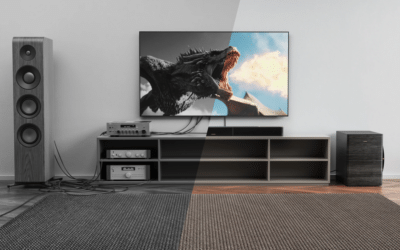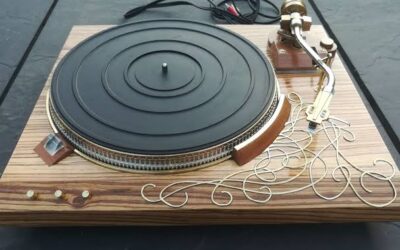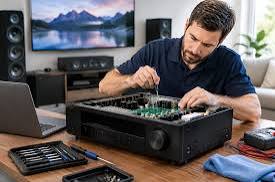
When a home audio system stops working properly, one important question comes to mind: should you repair it or replace it? Whether you own a stereo receiver, amplifier, bookshelf speakers, subwoofer, or complete home theatre system, the right decision depends on the type of fault, repair costs, equipment age, and your listening needs.
Buying new equipment can be expensive, especially if your current system includes several speakers and a high-quality receiver. On the other hand, repairing old equipment may not make financial sense if it requires expensive parts or has multiple faults.
For homeowners in Saskatoon, Saskatchewan, comparing repair and replacement costs can help avoid unnecessary spending. This guide explains the main cost factors, common audio equipment problems, and practical ways to decide which option offers better value.
1. Understanding Home Audio Repair Costs
The cost of repairing home audio equipment varies according to the device, the fault, the parts required, and the time needed to diagnose the problem.
A simple connection issue may be inexpensive to resolve, while a damaged amplifier circuit or a discontinued component may require more extensive work.
Common factors that affect repair prices
Type of equipment: A basic stereo receiver may be easier to diagnose than a complex home theatre receiver with multiple audio channels, HDMI connections, wireless features, and digital processing.
Nature of the fault: Loose external connections are generally simpler to address than internal circuit-board failures or damaged power supplies.
Parts availability: Older or discontinued equipment can be difficult to repair if replacement components are unavailable.
Labour and diagnosis: Some faults require extensive testing before the actual cause becomes clear. Diagnostic charges may be separate from repair costs.
Overall condition: If several components are failing, the combined repair cost may be higher than expected.
Before approving any repair, ask for a diagnosis, an estimated total cost, the expected turnaround time, and information about any warranty on the work.
For reliable budgeting, compare the quoted repair price with the cost of a suitable replacement rather than comparing it with the cheapest device available.
2. When Is Repair the More Affordable Option?
Repair is often worth considering when your audio system is relatively reliable, the problem is limited to one component, and replacement parts are available at a reasonable price.
For example, suppose your stereo receiver suddenly stops producing sound. The problem could involve a loose connection, a damaged speaker cable, an input setting, or an internal electronic fault.
If the issue is minor, repairing the receiver may cost considerably less than purchasing another unit.
Situations where repair may make sense
- Your amplifier or receiver has one identifiable fault.
- Your speakers still produce clear, balanced sound.
- The equipment offers features that would be expensive to replace.
- Compatible replacement parts are available.
- You are satisfied with the system’s sound quality.
- The repair includes a reasonable service warranty.
Repair can also be attractive when replacing one component would require buying additional equipment to maintain compatibility.
For instance, replacing a receiver might involve checking speaker impedance, available connections, subwoofer outputs, and compatibility with your television or other devices.
A professional assessment can help establish whether the existing system can be restored economically.
3. When Is Replacing Your Audio Equipment Better?
Sometimes replacement offers better long-term value than repair. This is especially true when equipment has multiple serious faults or when the repair estimate approaches the price of a suitable new product.
Consider an older home theatre receiver with a failing power supply, unreliable HDMI connections, and overheating problems. Repairing each issue separately may be expensive, particularly if additional faults appear during testing.
A newer receiver might offer improved connectivity, support for modern audio formats, and features that your existing model lacks.
Signs replacement may be the better choice
Repeated breakdowns: If the same device needs repairs frequently, continued servicing may become uneconomical.
Major component failure: A damaged amplifier section, transformer, or other costly component can make repair less attractive.
Unavailable parts: Some older devices cannot be repaired economically because suitable components are no longer available.
Outdated connectivity: Your equipment may lack the connections or functions required by your current television, streaming devices, or gaming system.
Poor overall condition: Extensive corrosion, physical damage, or multiple electrical faults may justify replacement.
Unsatisfactory performance: If your system no longer meets your listening needs, replacement may provide more value than restoring its existing capabilities.
However, age alone does not mean a device should be discarded. Some older amplifiers and speakers remain useful for decades when properly maintained.
4. Repair vs Replacement: Comparing the Costs
The best decision starts with comparing the complete costs of both options.
Imagine that a receiver needs repair and the technician provides a quote. Instead of looking only at the quoted amount, consider how much useful life the repair is likely to provide and whether the equipment meets your needs.
Use the following example as a budgeting illustration, not as a current Saskatoon market quotation.
| Expense | Repair option | Replacement option |
|---|---|---|
| Diagnosis or inspection | $50 | $0–$50, depending on the service |
| Repair or new equipment | $180 | $450 |
| Installation or setup | $0–$40 | $30–$80 |
| Estimated total | $230–$270 | $480–$580 |
In this hypothetical example, repair is less expensive upfront.
However, the decision should also consider the equipment’s condition, expected reliability, warranty, and available features.
If a repair costs $230 and restores a reliable receiver, it may be a sensible investment. If the receiver has several other faults and the repair offers little confidence in its continued operation, replacement could be more practical.
Calculate the real cost of ownership
A useful way to compare options is to estimate the cost over the period you expect to keep the equipment.
For example, if repairing a receiver costs $240 and you expect to use it for another four years, the repair cost averages $60 per year.
If a replacement costs $600 and you expect to use it for six years, its purchase cost averages $100 per year.
These calculations exclude electricity, additional repairs, resale value, and other expenses, but they provide a starting point for comparison.
The goal is not simply to choose the lowest initial price. It is to choose the option that provides dependable performance at a reasonable overall cost.
5. Repairing or Replacing a Stereo Receiver
A stereo receiver combines several functions, often including input selection, amplification, volume control, and radio reception. Home theatre receivers may also include HDMI switching, surround sound processing, and network connectivity.
Because receivers contain multiple electronic circuits, different faults can have very different repair costs.
Common receiver problems
- No sound from one or more channels.
- The receiver shuts down unexpectedly.
- Audio becomes distorted at higher volumes.
- The device overheats during normal use.
- HDMI connections stop working.
- The receiver produces humming or buzzing noises.
- Wireless or network features become unreliable.
Some issues can be resolved through external troubleshooting, such as checking cables, input selection, or ventilation. Other problems require internal diagnosis.
Repair is worth considering when the receiver has good overall performance and the fault can be isolated. Replacement becomes more attractive when repairs are extensive or the device lacks essential modern features.
Before deciding, check whether the cost of a replacement receiver would also require new cables, adapters, or other equipment.
6. Speaker Repair vs Buying New Speakers
Speakers are another important part of the repair-or-replace decision.
A speaker may stop working because of a damaged driver, faulty internal wiring, a worn connection, or a problem elsewhere in the audio system.
Not every speaker problem means the entire unit needs replacement.
When speaker repair may be worthwhile
Repair may be appropriate if the speaker cabinet is in good condition, the model delivers the sound you enjoy, and replacement parts are available.
For example, replacing a damaged driver or repairing an internal connection may restore performance without requiring a completely new speaker.
High-quality speakers can be particularly good repair candidates because comparable replacement models may cost significantly more.
When replacement may be better
Replacement may make more sense if the cabinet is severely damaged, several drivers have failed, or the required parts are unavailable.
Very inexpensive speakers may also cost less to replace than to repair, depending on the fault and labour involved.
Before buying new speakers, confirm that the amplifier is functioning correctly. A faulty amplifier channel or damaged cable can make a working speaker appear defective.
7. Subwoofer Repair vs Replacement
A subwoofer adds low-frequency sound to music, films, and home theatre systems. When it stops producing bass, the problem may involve settings, cables, the amplifier, the power supply, or the speaker driver.
Start with basic checks before assuming the subwoofer has failed.
Confirm that it is switched on, the volume is set appropriately, the correct input is selected, and the receiver’s subwoofer settings are configured correctly.
If these checks do not resolve the problem, the unit may require professional diagnosis.
Is subwoofer repair worth the cost?
Repair can be worthwhile when the cabinet and driver are in good condition and the fault involves a replaceable component.
Replacement may be preferable if the amplifier and driver are both damaged or if repair costs approach the price of a suitable new subwoofer.
Remember to compare equivalent products. A low-cost replacement may not provide the same bass performance, build quality, or room-filling sound as your existing model.
8. The Hidden Costs of Replacing Home Audio Equipment
The advertised price of new audio equipment does not always represent the complete cost of upgrading.
Depending on your setup, you may also need to budget for:
- New speaker cables or connectors.
- HDMI or optical audio cables.
- Adapters for older devices.
- Wall brackets or speaker stands.
- Installation and system configuration.
- Additional subwoofer or surround speakers.
- Delivery or disposal of old equipment.
Compatibility can also create unexpected expenses. A new receiver may have different connection options, speaker requirements, or setup procedures.
If your current system works well apart from one fault, repairing it could avoid these additional costs.
On the other hand, replacement may offer better value if your existing equipment requires several upgrades to work with your current devices.
Make a complete list of the items you need before comparing the total costs.
9. Environmental Benefits of Repairing Audio Equipment
Repairing electronics can also reduce unnecessary waste.
When a working audio system is discarded because of one faulty component, the remaining materials and usable parts may go to waste. Repair can extend the product’s useful life and reduce the immediate need to manufacture and purchase another device.
This is especially relevant for well-built receivers, amplifiers, and speakers that remain suitable for everyday listening.
However, repair is not automatically the most sustainable option in every situation. A severely damaged device that consumes excessive energy or cannot be repaired safely may be better replaced.
If replacement is necessary, look for appropriate electronic-waste recycling options in Saskatoon rather than placing unwanted electronics in ordinary household waste without checking local disposal rules.
10. How to Choose an Audio Repair Service in Saskatoon
Choosing a suitable repair service can make the process easier and help you avoid unexpected costs.
When comparing providers, consider their experience with your type of equipment, diagnostic process, repair estimates, parts availability, and warranty terms.
Questions to ask before approving a repair
What is causing the problem? Ask the technician to explain the fault in understandable terms.
What is the total estimated cost? Confirm whether diagnosis, parts, labour, and taxes are included.
Are replacement parts available? This is especially important for discontinued or older equipment.
Is the repair guaranteed? Ask whether the service includes a warranty and what it covers.
How long will the repair take? The timeframe may depend on the complexity of the fault and parts availability.
What happens if the repair is not economical? Find out whether diagnostic charges still apply if you decide against the repair.
For local support, Audio repair Saskatoon is a useful starting point for exploring service options for home audio equipment.
Provide the model number, describe the symptoms, and explain any troubleshooting you have already attempted. This information can help a technician understand the issue and advise you on the next steps.
Avoid attempting internal electrical repairs yourself unless you have the appropriate training. Amplifiers and receivers may contain components that retain dangerous voltages even after the equipment has been unplugged.
11. A Simple Decision Checklist
Before choosing repair or replacement, work through these questions.
- Is the problem clearly identified? A reliable diagnosis prevents unnecessary spending.
- How much will the repair cost? Request a complete estimate.
- Is the equipment otherwise in good condition? Consider its overall reliability, not just the current fault.
- Are the required parts available? Unavailable components may make repair impractical.
- Does the system meet your needs? Consider connectivity, sound quality, and compatibility.
- How long might the repair remain useful? Ask the technician for a realistic assessment.
- What is the cost of a comparable replacement? Compare similar performance and features.
- Are there additional replacement expenses? Include setup, cables, and accessories.
- Does the repair include a warranty? Warranty terms can affect the value of the service.
- Which option provides better long-term value? Consider cost, reliability, convenience, and expected use.
Answering these questions can make the decision more straightforward.
Conclusion
Choosing between home audio repair and replacement depends on more than the equipment’s age. The type of fault, repair estimate, parts availability, overall condition, and cost of comparable new equipment all matter.
Repair is often worth considering when the fault is limited, the equipment is otherwise reliable, and the repair cost is reasonable. Replacement may be the better choice when multiple major components have failed, parts are unavailable, or the system no longer meets your needs.
For Saskatoon homeowners, obtaining a clear diagnosis and comparing the full costs of both options can help prevent unnecessary spending. Before replacing a receiver, amplifier, speaker, or subwoofer, find out whether a practical repair could restore its performance.
A careful comparison can help you protect your budget, extend the useful life of suitable equipment, and enjoy reliable home audio for years to come.
Frequently Asked Questions
1. Is it cheaper to repair or replace a home audio system?
Repair is often cheaper when the problem is limited to one component and replacement parts are available. Replacement may be more economical when the equipment has multiple serious faults or repair costs approach the price of a suitable new system.
2. How much does home audio repair cost in Saskatoon?
The cost depends on the equipment, the fault, labour, and replacement parts. Contact a local repair service for a diagnosis and estimate before deciding whether to repair or replace your equipment.
3. Is it worth repairing an old stereo receiver?
Yes, if the receiver is in good condition, the fault is repairable, and the estimated cost is reasonable. Older equipment can remain useful for many years, but unavailable parts or repeated failures may make replacement a better option.
4. Should I repair or replace a broken speaker?
Repair may be worthwhile when the speaker cabinet is in good condition and the fault involves a replaceable component. Replacement may be more practical if several parts are damaged or the repair cost is close to that of a comparable speaker.
5. When should I replace my home theatre receiver?
Consider replacement if the receiver has several major faults, cannot support the connections you need, or costs too much to repair. If the fault is minor and the receiver meets your requirements, repair may offer better value.
6. Is repairing a subwoofer worth it?
It can be worthwhile if the fault is limited to a replaceable component and the repair cost is reasonable. If both the driver and amplifier are damaged, compare the repair estimate with the price of a suitable replacement.
7. Does the age of audio equipment determine whether it should be replaced?
No. Age is only one factor. Equipment condition, repairability, performance, parts availability, and the cost of replacement are equally important.
8. Should I get a diagnosis before buying new audio equipment?
Yes. A professional diagnosis can help determine whether the problem is caused by a cable, speaker, receiver, amplifier, or another component. This can prevent you from replacing equipment that could be repaired.
9. What should I ask an audio repair technician before approving a repair?
Ask about the diagnosis, total estimated cost, parts availability, expected completion time, and warranty. Also confirm whether diagnostic charges apply if you decide not to proceed.
10. Can repairing home audio equipment help reduce electronic waste?
Yes. Repairing suitable equipment can extend its useful life and reduce the need to replace it unnecessarily. If replacement is unavoidable, investigate appropriate electronic-waste recycling options in your area.
SEO Details
SEO Title: Home Audio Repair vs Replacement: Cost Guide
Meta Description: Compare home audio repair vs replacement costs. Learn when to repair receivers, speakers, amplifiers, and subwoofers in Saskatoon.
URL Slug: home-audio-repair-vs-replacement-cost-guide
Target Keyword: Audio repair Saskatoon
Target Location: Saskatoon, Saskatchewan, Canada
Refine the article further